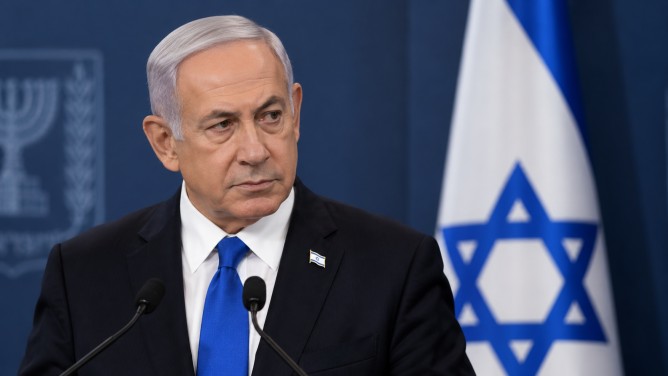
A recent Israeli television poll reveals that Prime Minister Benjamin Netanyahu’s supporting bloc and the opposition parties are evenly matched, each holding 53 seats. Meanwhile, Arab parties are expected to secure 14 seats. Neither side approaches the 61-seat threshold required for a majority in the Knesset.
This finding represents a significant change from the network’s earlier poll, where the opposition was leading with a projected 57 seats compared to Netanyahu’s 48. The shift is largely due to the emergence of two right-wing parties in the Knesset’s projections: Ofer Winter’s People of Israel, expected to gain four seats, and the Religious Zionism-Zehut alliance, which is anticipated to secure six seats.
Netanyahu’s Likud party has also managed to close the gap with the opposition frontrunner Yashar, led by Gadi Eisenkot. Current projections show Yashar winning 22 seats, closely followed by Likud with 21. Meanwhile, the primarily Arab Joint List has increased its support and is now projected to capture nine seats. On the other hand, the B’Yachad alliance, led by Naftali Bennett and Yair Lapid, has seen a decline to 12 seats.
The poll also indicates that several parties, including Unity, Blue and White, and Zionist Home-The Reservists, might fall short of the electoral threshold needed to enter the Knesset. This could further complicate the political landscape as both major blocs struggle to form a majority.
The survey polled 940 individuals and carries a margin of error of 3.4%. As the political scene remains fluid, these figures highlight the ongoing volatility and the challenges faced by both Netanyahu’s government and the opposition in securing a stable parliamentary majority.