
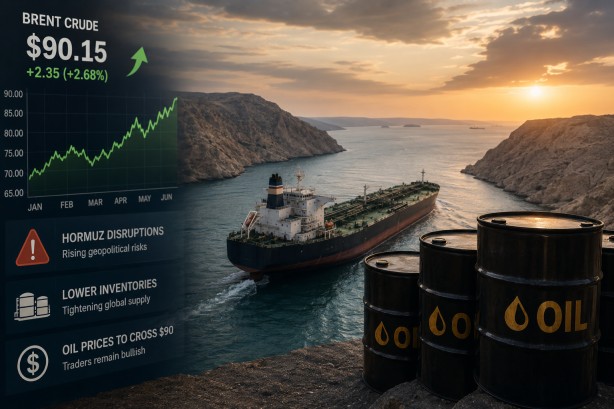
Oil prices have experienced their most significant weekly increase since April, with Brent crude nearing $85 a barrel following an 11% rise over the past week. However, analysts suggest that a substantial disruption in the Strait of Hormuz or a clear indication of tightening global supplies would be necessary for prices to climb above $90 per barrel. The surge in prices has been fueled by renewed tensions between the United States and Iran, impacting Middle Eastern supply routes and slowing tanker traffic through the critical Strait of Hormuz.
Despite these regional tensions, Brent crude has struggled to surpass the week’s high of $87.55 per barrel. Market experts indicate that traders are still anticipating diplomatic efforts to avert a prolonged crisis. The Strait of Hormuz remains a focal point for energy markets, as it is a critical passageway for approximately 20% of the world’s oil supply. The recent slowdown in tanker movements has heightened concerns, prompting shipping companies to closely observe the security dynamics in the area.
The effects of these developments are already being felt in fuel markets. In the United States, refining margins have increased due to tighter diesel and gasoline supplies, while European fuel markets are also under mounting pressure. Concerns over global supply have been further exacerbated by additional disruptions to Russian exports.
According to analysts, a decisive move above $90 per barrel for oil prices is unlikely unless there is a significant decrease in inventories or if tensions between Washington and Tehran intensify, leading to prolonged shipping disruptions through the Strait of Hormuz. In the meantime, traders remain focused on diplomatic progress and supply data, which will play a crucial role in determining the next significant move in global oil markets.