
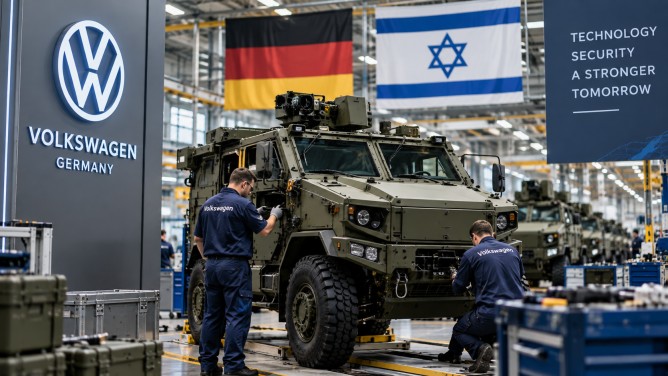
Volkswagen is set to transform its Osnabrück plant in Germany into a defense production facility after ceasing vehicle manufacturing operations in 2027. The German automotive giant has entered into an agreement with Israeli defense firm Rafael to initially produce systems and components for air defense systems, which are intended for Germany and other European countries. The plant will be sold to Tel Aviv-based Aurelius Capital, in partnership with the state of Lower Saxony, one of Volkswagen’s major shareholders.
This strategic shift is expected to preserve a minimum of 1,200 jobs at the Osnabrück site, providing a new industrial direction for the facility. Volkswagen’s decision comes after determining to halt vehicle production at the plant back in 2024 due to dwindling demand, escalating production costs, and intensified competition from Chinese automakers. The move aligns with Volkswagen’s broader restructuring efforts, which include plans to cut approximately 100,000 jobs across its global operations in the upcoming years.
Aurelius Capital, which has stakes in cybersecurity, drone technology, and satellite systems, views the Osnabrück facility as a valuable asset. The plant offers a skilled workforce, advanced manufacturing capabilities, and an established production infrastructure that would be challenging to replicate anew. The conversion to defense production could serve as a blueprint for other Volkswagen plants facing uncertain futures, as the European automotive industry explores alternative uses for underutilized factories.
The transition to defense manufacturing at Osnabrück reflects a growing trend among industrial companies in Europe that are considering defense-related projects as viable options for automotive plants with diminishing prospects. This shift not only aims to secure employment but also to leverage existing industrial capabilities in a sector increasingly seen as vital for national and regional security.