
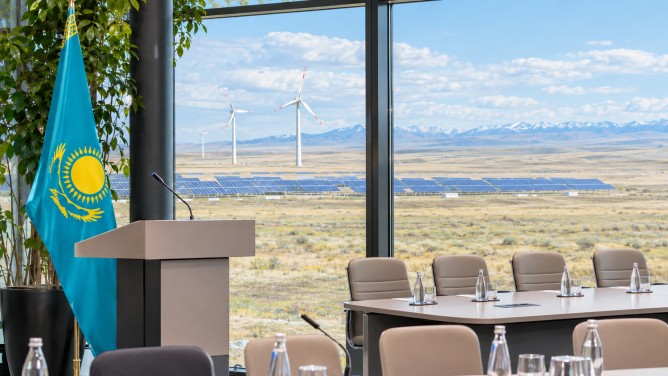
Kazakhstan has secured approximately $1.2 billion in agreements at the COP31 climate summit in Antalya, Türkiye, aimed at bolstering its renewable energy development and enhancing gas infrastructure. These deals are part of Kazakhstan’s broader strategy to transition towards a low-carbon economy.
The agreements include the development of a 150-megawatt wind farm in the Turkistan Region and a 1-gigawatt wind farm in the Kostanai Region. A significant initiative under these deals is the Aqyl Energy project, which seeks to deploy 1.35 million smart gas meters across gas-connected regions in Kazakhstan to enhance energy efficiency and monitoring.
Further agreements focus on reducing methane emissions from gas distribution networks and restoring degraded lands in the Almaty Region. These projects are expected to support Kazakhstan’s emissions reduction efforts through international cooperation and participation in carbon market mechanisms.
In addition to these projects, Kazakhstan is advancing its climate investment strategy through the Country Climate Investment Platform. This platform aims to connect government bodies, international financial organizations, and private investors with key environmental projects.
The Qazaqstan Just Energy Transition investment platform (QaJET) is another initiative that seeks to mobilize about $20 billion in investments to develop at least 10 gigawatts of renewable energy capacity by 2035. This program also encompasses modernizing electricity grids, enhancing energy storage, and driving electrification projects.
Kazakhstan is committed to reducing its greenhouse gas emissions by 17% below 1990 levels by 2035, with a conditional target of a 25% reduction if sufficient international support is obtained. The country also aims for carbon neutrality by 2060.
Beyond renewable energy, Kazakhstan is focusing on water security and environmental protection across Central Asia. The effects of climate change are putting pressure on regional water resources, agriculture, and ecosystems. Kazakhstan’s priorities include improving the monitoring of glaciers and rivers, strengthening agricultural resilience, restoring the Northern Aral Sea, and protecting the Caspian Sea ecosystem. The country has advocated for the establishment of an international water organization within the United Nations system to address global water challenges collaboratively.