
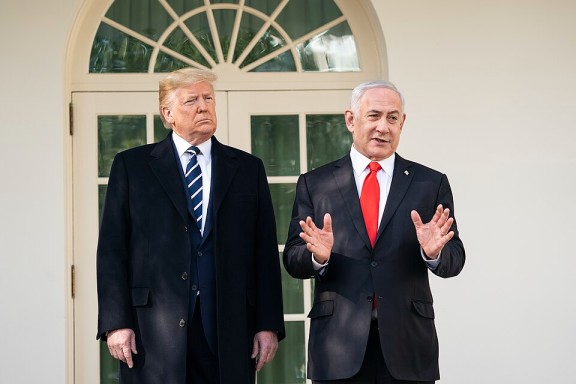
Israeli Prime Minister Benjamin Netanyahu and U.S. President Donald Trump discussed the potential renewal of hostilities with Iran during a phone call on Sunday evening. According to reports, the leaders also talked about Trump’s recent visit to China. Following the call, Netanyahu held a security meeting in Jerusalem with top ministers to assess the situation. This meeting, often referred to as the “small security cabinet,” included key figures such as Foreign Minister Gideon Sa’ar and Defense Minister Israel Katz. These discussions come amid heightened tensions after a drone attack on a UAE nuclear power plant, which Israel and the U.S. suspect is linked to Iran.
Meanwhile, Trump is set to convene with his national security advisers to explore military options against Iran, as negotiations between the two nations remain at a standstill. Trump remains optimistic about reaching a deal but has issued stern warnings to Iran, emphasizing the urgent need for progress. The U.S. President recently returned from talks with Chinese President Xi Jinping, during which Xi reportedly offered assistance in reopening the critical Strait of Hormuz and pledged not to support Iran militarily.
In response to these developments, Iranian officials have issued strong warnings against any renewed military actions by the U.S. Iranian military spokesman Abolfazl Shekarchi cautioned Trump against resuming attacks, while Deputy Speaker of Parliament Hamidreza Hajibabaei threatened retaliatory measures affecting global oil supply if Iranian oil infrastructure is targeted. Iranian media has criticized the U.S. for not providing tangible concessions in recent negotiations, as Iran seeks the lifting of sanctions and the end of the U.S. naval blockade.
The situation has been further complicated by a recent drone attack that caused a fire near the Barakah Nuclear Power Plant in the UAE. While the incident did not result in injuries or affect radiation levels, it has added to regional tensions. The UAE has accused Iran of orchestrating attacks on its infrastructure, although the drone’s origin remains unconfirmed. The International Atomic Energy Agency has expressed grave concern over the attack, highlighting the unacceptable risk to nuclear safety.
Amidst these tensions, the U.S. remains steadfast in its demands, requiring Iran to limit its nuclear activities significantly. Iranian proposals include the cessation of hostilities and the lifting of sanctions, but U.S. officials have been reluctant to concede, leading to a diplomatic deadlock. As regional powers like the UAE and Saudi Arabia reportedly engage in military action against Iran, the situation remains volatile, with diplomatic efforts yet to yield a breakthrough.