
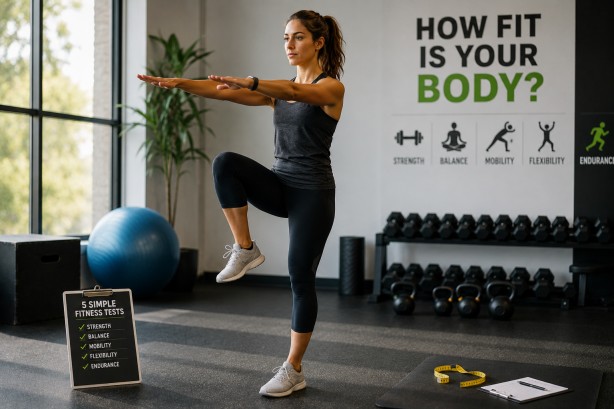
Functional fitness encompasses more than just traditional exercise routines like weightlifting or running. It involves the ability to perform everyday movements such as squatting, standing up from the floor, and balancing, which provide critical insights into one’s physical capabilities. Five straightforward movements can help assess different aspects of physical aptitude, including strength, flexibility, mobility, grip, and balance. These exercises typically require minimal equipment and can be safely performed at home.
The first exercise is a deep squat hold. Begin by standing with feet hip-width apart and lower into a deep squat, ensuring your heels remain on the floor. Attempt to hold this position for up to 60 seconds without any external support. This test evaluates ankle, knee, and hip mobility, as well as lower-body strength and control. If maintaining the position proves challenging or if your heels lift off the ground, it might indicate a need for improved mobility or lower-body control.
The second movement, a dead hang, involves gripping a secure pull-up bar and holding your body off the ground with extended arms for 30 seconds. This exercise measures grip strength and upper-body endurance while also requiring shoulder stability and control. It’s important for beginners to use a stable bar and avoid this exercise if they risk aggravating any existing injuries.
Another practical test is getting up from the floor without relying on hands, knees, or forearms for support. This movement demands a mix of lower-body strength, balance, coordination, and mobility. While performance can vary due to age, flexibility, past injuries, and fitness levels, it can highlight areas needing further development.
To assess flexibility, try a forward fold by standing with feet hip-width apart and bending forward with straight legs to see how far you can comfortably reach. This movement tests the flexibility of the hamstrings and other muscles along the back. Failure to touch the floor doesn’t necessarily indicate poor health, as flexibility varies between individuals and can be enhanced through consistent stretching and mobility exercises. Lastly, single-leg balance involves standing on one leg and maintaining stability, with an advanced option of closing your eyes. This exercise evaluates balance, proprioception, and ankle stability. Ensure you’re in a safe area where you can quickly stabilize if needed. Overall, these movements offer a glimpse into functional fitness components, encouraging individuals to identify areas for improvement and work on them gradually through safe exercise practices.